Brewing Guides · THE WUZHISHAN JOURNAL
How to Brew Loose-Leaf Tea in a Mug
Make a satisfying first cup of loose-leaf tea with a mug and basket infuser. Learn what to buy, how to measure, and which small adjustments improve your brew.
This guide includes retailer links. Links marked “affiliate” may earn us a commission at no extra cost to you. Read our link disclosure and editorial policy.
In this guide
The kettle is heating, breakfast is nearly ready, and a bag of loose tea is waiting on the counter. You do not need a ceremonial tray or a matching set to use it. A favorite mug and a basket infuser are enough to make a proper cup, provided the leaves have room to open and you can take them out when the tea tastes right.
The easiest first method is also the most repeatable: keep your mug, leaf quantity, water level, and timer consistent. Then change one thing if the cup needs adjusting. Buying more equipment before finding that baseline usually adds decisions without solving the original problem.
Assemble a small, useful setup
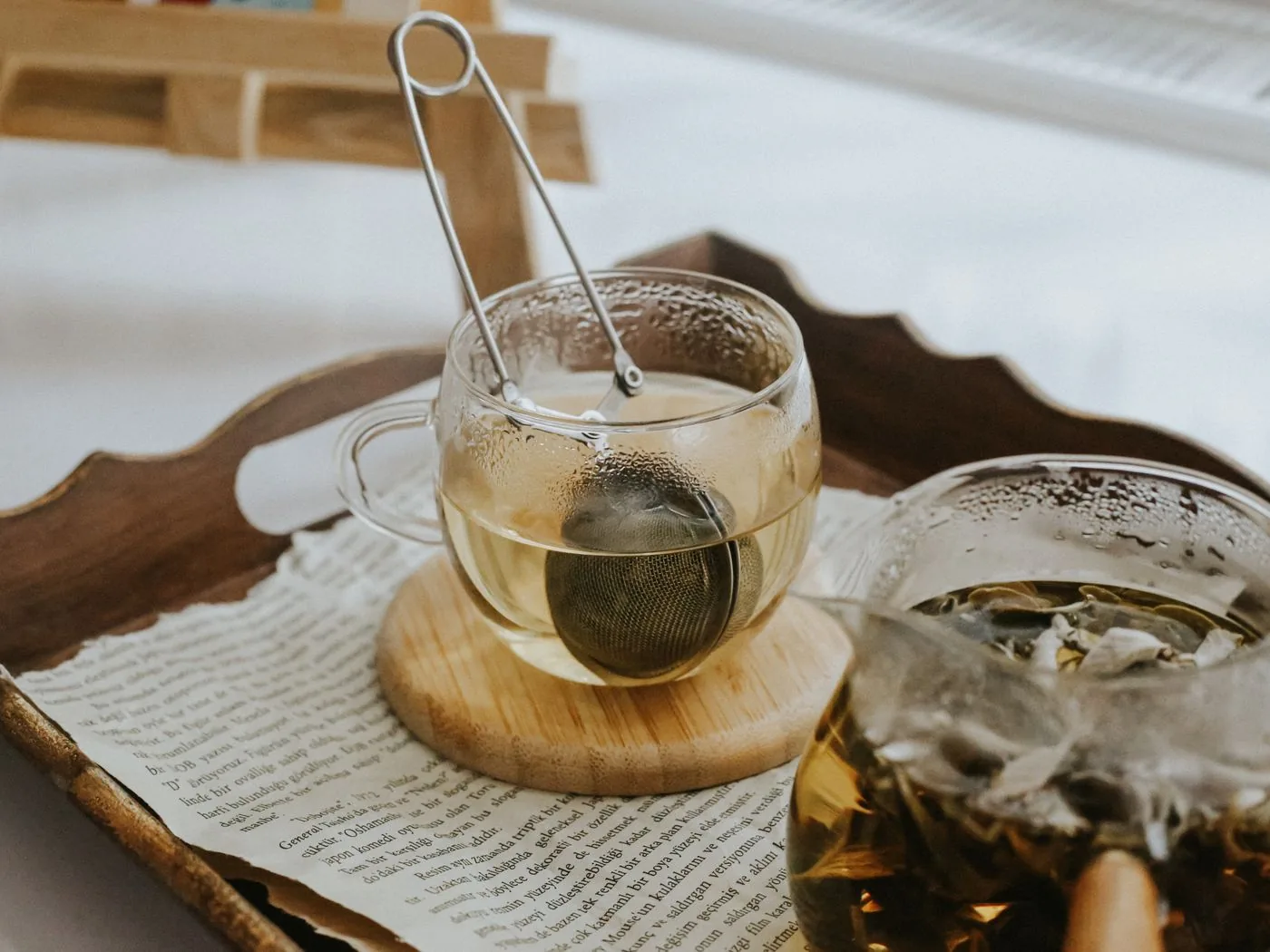
Choose a heat-safe mug, a removable basket that fits securely across its rim, and a small dish for the wet basket. Use potable water and a kettle suited to your kitchen. A phone timer works perfectly well. A kitchen scale is helpful if you already own one, but it is not a requirement for your first cup.
A basket should leave space for leaves to expand. Tightly filling a tiny tea ball can make brewing uneven and cleanup fiddly, especially with rolled oolong or large leaves. A fine mesh is useful for broken tea, although very fine particles may still reach the cup. Our infuser buying guide explains the practical differences.
Read the packet before choosing a ratio
Tea shapes vary too much for one teaspoon to be an exact universal measure. A spoonful of fine black tea and a spoonful of fluffy white tea can weigh quite differently. Follow the supplier’s grams, water volume, temperature, and time when these are available. If the instructions specify a small concentrated pot, do not assume the same quantity belongs in a large mug.
For a straightforward mug-style black tea, around 2–3 grams per 250 milliliters is a reasonable experimental starting point when no instructions are supplied. Start green tea with its own packet guidance: Japanese sencha recipes, for example, can use substantially more leaf and shorter steeping than a general Western mug method. These are different approaches, not competing rules.
Brew one cup, step by step
- Check your mug’s comfortable drinking volume. Leave room below the rim so moving it does not spill hot liquid.
- Put the measured leaves into the dry basket. Place it securely in the mug.
- Heat fresh potable water to the tea seller’s recommended temperature. Do not use a low brewing temperature to make unsafe water safe.
- Pour carefully over the leaves and start the timer. Keep your fingers away from steam and the hot basket.
- When the suggested time is reached, lift the basket onto its dish. Let the tea cool enough to sip before assessing it.
Removing the leaves matters. Leaving a basket in the mug throughout breakfast continues extraction, so the last third can taste very different from the first. If the basket has a lid, check the maker’s instructions before treating that lid as a drip tray.
Adjust the next cup with a clear purpose
If the tea is pleasantly flavored but too light, use a little more leaf next time. If it tastes harsh, shorten the infusion before making several simultaneous changes. With green tea, an overly hot brew can also be worth correcting; our guide to green tea without bitterness walks through that process.
If the tea seems flat or tastes of the water supply, compare a fresh cup made with another safe drinking water. A filter may help with a particular taste, but an expensive filter is not automatically necessary. Record a short note such as “three grams, one mug, three minutes; slightly strong.” That is more useful tomorrow morning than trying to remember an elaborate tasting description.
Buying advice: spend on fit and everyday usefulness
For a first purchase, prioritize a sample-size tea with clear brewing directions and an infuser that genuinely fits your mug. Look for an opening large enough to empty the leaves, a stable rim, and care instructions you can follow. Check whether handles or lids become hot. A beautiful basket that tips into your mug is a poor fit for a busy breakfast routine.
Skip a large mixed accessory kit until you know which method you enjoy. A specialist kettle makes sense if you repeatedly brew teas needing different temperatures; it is less urgent if you drink one familiar black tea. Likewise, a pot becomes useful when sharing, but it should match the quantity you actually drink rather than the largest set on display.
Two common questions
Can I brew loose tea without an infuser?
Yes. Brew in one heat-safe vessel and strain into another using a suitable kitchen strainer. Check that you can pour securely without burning your hands. This uses another vessel and takes more counter space, which is why a mug basket is often easier for daily use.
Can I use those leaves again?
Some teas give an enjoyable second infusion during the same tea session. Drain the leaves after the first brew and taste the next cup rather than assuming it needs the same time. Do not leave wet leaves on the counter overnight to stretch their value. When you are finished drinking, discard them and clean the basket.
TAKE THE NEXT STEP
Compare the details before you buy.
Read the current product description, brewing or care instructions, delivery terms, and returns policy. These links open the retailer’s own website; the photograph above does not represent a specific product.
Sources & further reading
Supplier instructions and primary references informing this guide. Specific products and guidance can change; confirm current details before buying.
- UK Tea & Infusions Association: The Perfect Brew · Checked 2026-11-14
- Ippodo: Standard Sencha Brew · Checked 2026-11-14
A correction or a question? Get in touch.