Brewing Guides · THE WUZHISHAN JOURNAL
A Simple Gongfu Tea Session at Home
Explore gongfu tea with a small pot, short infusions, and a comfortable table. Learn a practical first setup, safe pouring, and which accessories can wait.
This guide includes retailer links. Links marked “affiliate” may earn us a commission at no extra cost to you. Read our link disclosure and editorial policy.
In this guide
A friend comes over on a quiet afternoon. Instead of making two large mugs and leaving the kettle alone, you put a small pot in the middle of the table and share several little pours. That is a useful way to approach a first gongfu session: as a chance to pay attention to the same leaves more than once, rather than a performance with a long shopping list.
Gongfu practice has many regional and personal expressions. This guide offers a modest home starting point, not a claim to represent every tradition. If you are learning from a tea seller or teacher, follow their method and ask why a particular step matters.
Choose a forgiving place to begin
A familiar oolong is a practical candidate because you can compare it with the way you already drink it. Buy a small amount with explicit gongfu directions. Rolled and strip-shaped oolongs may need different quantities and timing, so do not fill a pot by an arbitrary fraction and assume it will suit every leaf.
Pick a table away from a laptop, crowded edges, and children’s reach. Keep the kettle on a stable surface with its cable clear. Set a towel and a bowl nearby for drips and discarded water. You can make a calm tea table without deliberately spilling water or using a large drainage tray.
Use a small, understandable set
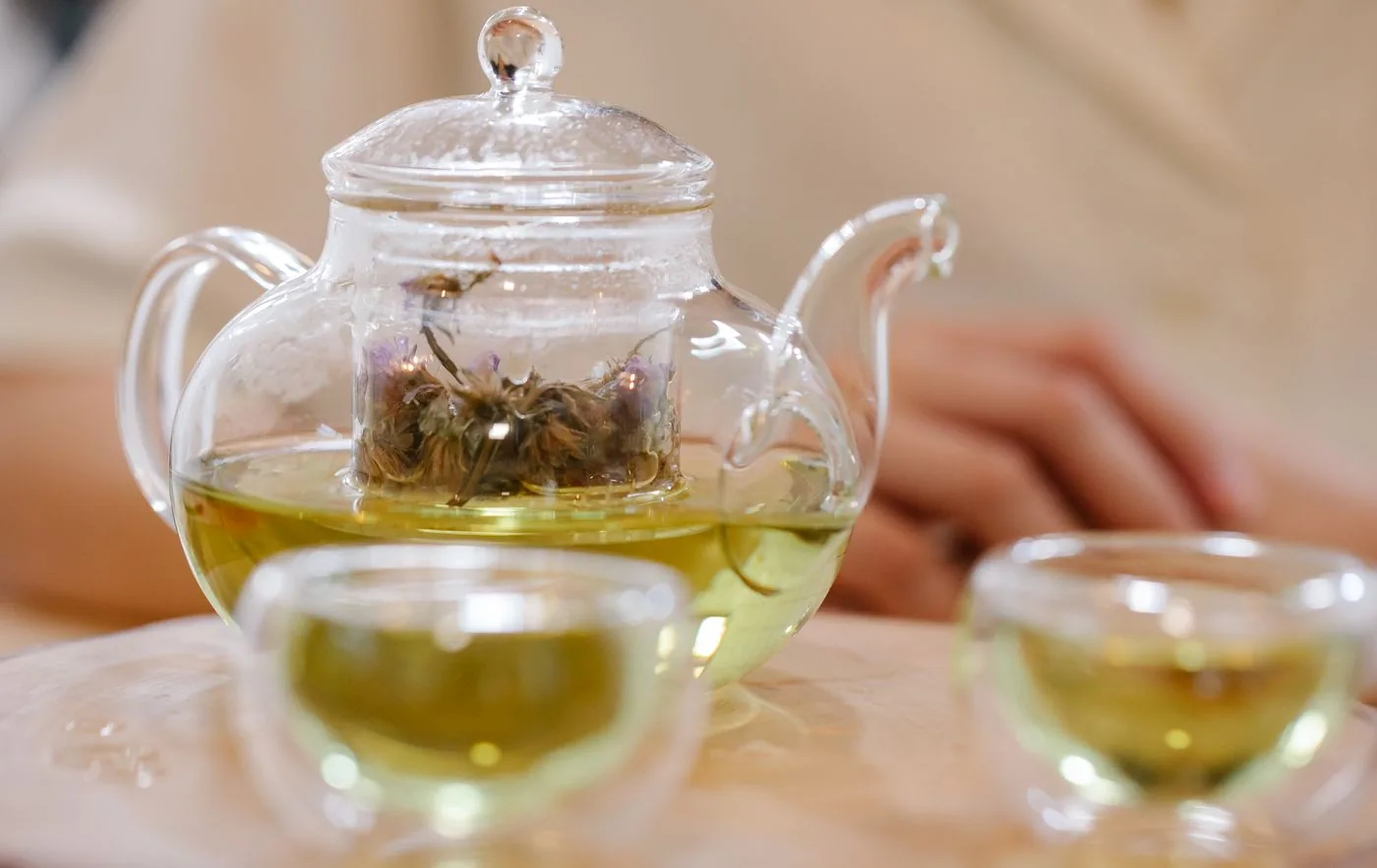
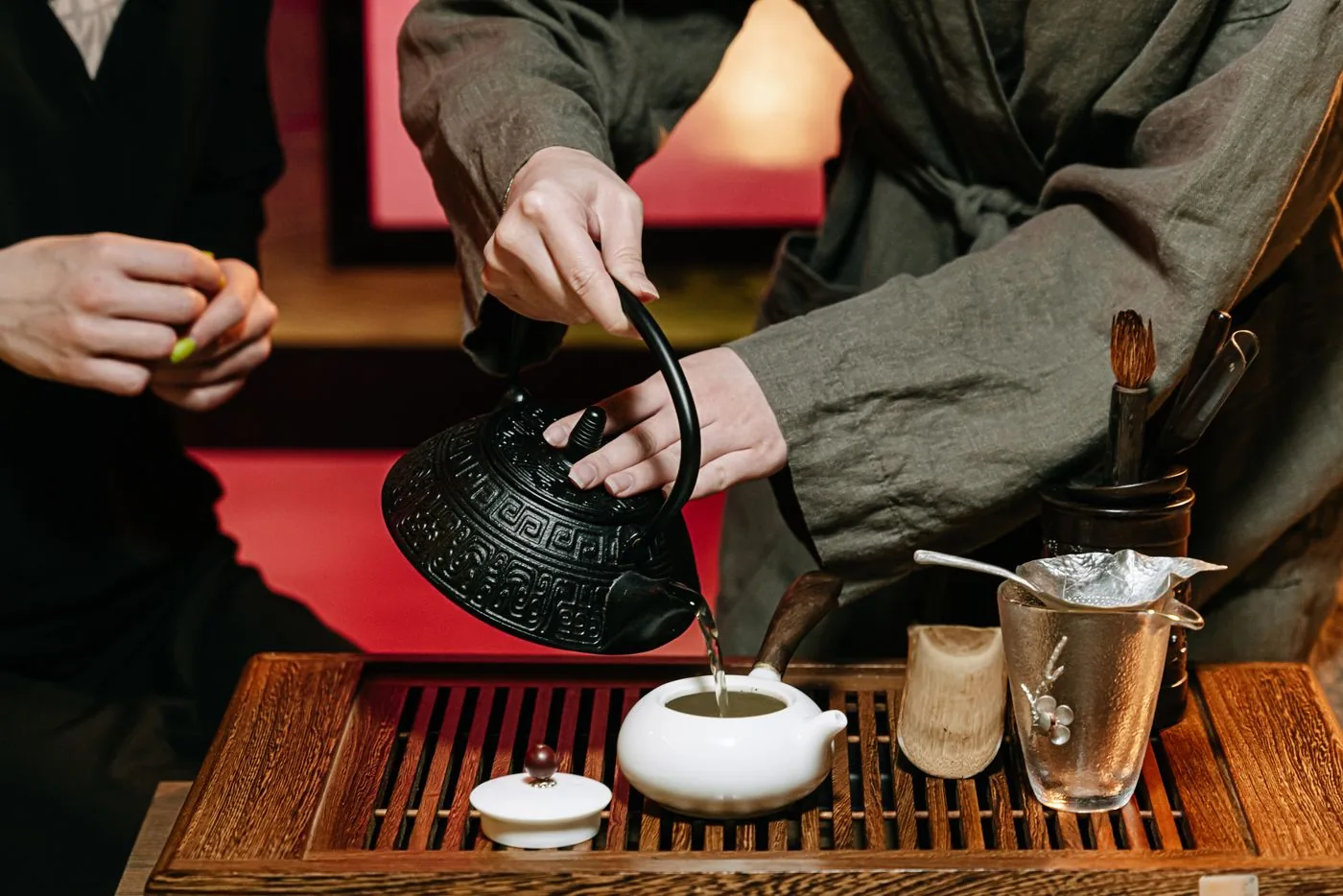
The essential brewing vessel can be a small teapot or gaiwan. A serving pitcher, sometimes called a fairness pitcher, collects the finished infusion before you divide it between cups. TeaVivre’s guide describes that role: it helps distribute an infusion evenly rather than giving one guest the first weak pour and another the final stronger pour.
A teapot with a handle may be easier for a beginner than a thin gaiwan filled with very hot water. If you choose a gaiwan, practice the grip and pour using cool water before heating anything. Our beginner gaiwan guide covers selection. There is no prize for handling a vessel that feels unsafe in your hands.
Prepare the first infusion
- Measure the vessel’s usable water capacity, leaving room to hold and pour it safely.
- Measure the tea according to its gongfu instructions. A recipe designed for a large Western pot is not interchangeable with a concentrated small-vessel method.
- Warm suitable vessels with hot water if their maker permits it, then empty them carefully. Follow the tea seller’s advice on whether the leaves need a brief rinse; do not regard rinsing as a way to sanitize unsafe tea.
- Add water at the recommended temperature, begin timing, and pour the infusion fully into the pitcher.
- Share it among the cups and allow it to cool before sipping.
Pouring is part of the steeping time. If your vessel takes a long time to empty, account for that instead of waiting for a timer and then starting a slow pour. Do not grip a hot lid knob or rim without checking how the vessel behaves.
Let the next cup guide the next pour
Short successive infusions let you notice how aroma, texture, and strength change as leaves open. The next brew is not automatically better or worse. It may become fuller, quieter, or simply different. Try the supplier’s suggested sequence, then lengthen or shorten a later infusion to suit your taste.
Drain between rounds rather than leaving leaves submerged. Keep a small note of the recipe if something works particularly well. When a cup becomes thin and uninteresting, finish the session instead of forcing a promised number of steeps. The practical approach in resteeping tea leaves applies here too: enjoy them within the session and discard them when you are done.
Buying advice: buy for your actual table
For two people, choose vessel and cup sizes that divide into manageable servings. Confirm stated capacities and remember that a pot filled to its brim is not its comfortable pouring capacity. Look for a lid that fits securely, an unobstructed spout, and a handle or rim you can use with confidence. A clear product photo cannot tell you how a hot vessel feels, so read care and return information as well.
Start with glazed porcelain or another material with straightforward care instructions if you want to explore different teas. An expensive clay pot is a separate collecting and brewing decision; it is not a prerequisite for attentive tea. A tray, aroma cups, tea pet, and specialized tools can come later if you enjoy using them.
Two common questions
Do I need a full matching set?
No. Coordinated pieces can be lovely, but capacity, pouring, and safe handling are more important. Two existing heat-safe cups and a suitable small pitcher may serve perfectly well. Avoid using an attractive decorative object as a hot-water vessel unless its maker says that is its purpose.
Can I do this alone?
Yes. Choose a smaller brewing vessel so successive infusions do not create more tea than you want. You can pour directly into one suitable cup if its capacity is enough and you can drain the pot completely. A solo session is still an opportunity to slow down and notice what changes.
TAKE THE NEXT STEP
Compare the details before you buy.
Read the current product description, brewing or care instructions, delivery terms, and returns policy. These links open the retailer’s own website; the photograph above does not represent a specific product.
Sources & further reading
Supplier instructions and primary references informing this guide. Specific products and guidance can change; confirm current details before buying.
- TeaVivre: How to Properly Use a Gongfu Ceremonial Tea Set · Checked 2026-11-14
- UK Tea & Infusions Association: The Perfect Brew · Checked 2026-11-14
A correction or a question? Get in touch.