Teaware · THE WUZHISHAN JOURNAL
How to Choose Your First Everyday Teapot
Choose an everyday teapot around the cups you actually pour, the leaves you enjoy, and the cleanup you can manage, with a clear guide to useful tradeoffs.
This guide includes retailer links. Links marked “affiliate” may earn us a commission at no extra cost to you. Read our link disclosure and editorial policy.
In this guide
The kettle is on, your favorite mug is ready, and the teapot you bought for weekend visitors is too large for a Tuesday breakfast. You can fill it halfway, but the basket barely reaches the water. Choosing a first teapot is less about building a collection than avoiding this small, repeated inconvenience.
A useful everyday pot should fit the amount you drink, give leaves room to open, and be easy to empty before you leave the kitchen. Start there. Shape, color, and the pleasure of setting it on the table still matter, but they come after a comfortable cup.
Measure the cups you actually use
Fill your usual cup with the amount of water you like to drink, then measure that water in a kitchen jug. Do the same for a second cup if you normally share. Product photographs make it difficult to judge scale, and a seller’s description of “two cups” may refer to cups much smaller than your own.
Compare the result with the pot’s stated capacity, allowing for leaves and a little space below the lid. Check whether capacity means brimful or recommended brewing volume. A compact pot often suits a solo morning better than a large entertaining pot. If your habits vary, two simple vessels can be more useful than one oversized compromise.
Give the leaves a practical exit
A removable basket lets you separate leaves from the brewed tea when the infusion is ready. Look for enough room for the leaves you use to expand, and a handle you can lift without reaching into hot water. A tiny ball suspended in a large pot is not automatically the best arrangement.
Some teapots have a fixed filter near the spout instead. These work well when you plan to pour the entire infusion into cups or a serving jug. They are less convenient if you leave tea sitting with the leaves while you answer a message. Think about the pause between your first and second cup.
Check the pour, lid, and handle
When shopping in person, hold the empty pot with one hand and imagine its weight when filled. Check knuckle clearance and whether your wrist stays comfortable. Ask whether the lid needs to be held during pouring and how that is done safely. Online, look for a clear side view of the handle and spout rather than relying on a styled overhead image.
A broad lid opening makes it easier to remove leaves and see inside during cleaning. A lid that fits securely matters more than an elaborate finial. Small drips can happen with many designs; a washable tray is sensible, but it should not disguise a pot that is awkward for you to control.
Choose a material for your routine
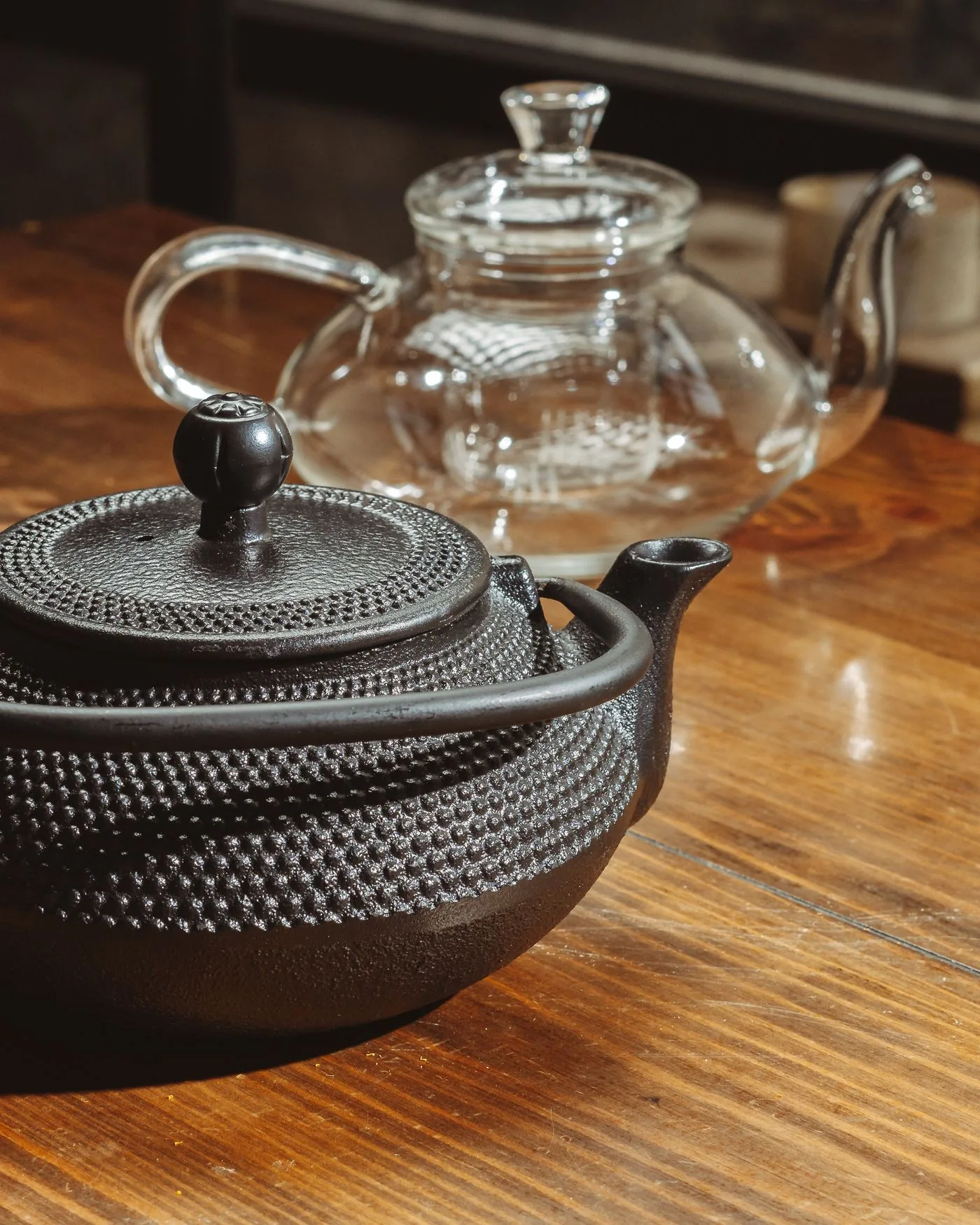
Glass makes the color of the infusion and the unfolding leaves visible. It can be especially satisfying for a shared afternoon pot. Glazed ceramic offers a broad range of shapes and colors and makes switching between tea styles straightforward when cleaned properly. Individual designs differ, so do not assume every ceramic pot retains heat better than every glass one.
Unglazed clay introduces extra decisions about care and dedicated use. It is an interesting later purchase, but a neutral glazed pot is usually easier for a household that alternates jasmine, black tea, and herbal blends. Our glass versus ceramic guide explores those everyday tradeoffs.
Buying advice: pay for ease before decoration
Prioritize stated capacity, a comfortable handle, removable or accessible filtration, and clear care instructions. Look for replacement lids or baskets if you expect the pot to become a daily fixture. A maker or retailer should identify the material and intended use, including whether the pot is dishwasher-safe or suitable for direct heat.
Skip the assumption that a teapot belongs on the stove. Many are brewing vessels only. Do not pay for an enormous matching set before you know which cup size you enjoy. A plain pot with your existing mugs can make a more useful first setup than a gift box filled with pieces you will rarely use.
Compare shipping and return conditions as well as the item itself. A delicate pot arriving from overseas may be harder to return than a locally stocked alternative. Retailer descriptions are useful for dimensions and instructions; their promotional language is not proof that a pot will suit your hands.
A simple first-week routine
Rinse and inspect the new pot according to its instructions. Brew a tea you already know, using the seller’s suggested leaf quantity and infusion time as starting points. Pour the finished tea completely, empty the leaves, and wash the accessible surfaces. Let the parts dry with the lid off before putting them away.
If the pot is too large, inconvenient to drain, or uncomfortable when full, address that during the return window. Do not keep adjusting your whole morning around an unsuitable purchase. The basic loose-leaf method can help you compare the new pot with a familiar mug-and-basket setup.
Frequently asked questions
Do I need a matching teapot and cups?
No. Matching pieces can look lovely, but existing cups work if their volume suits the pot. Measure before buying, and make sure you can serve the finished infusion without leaving an unwanted portion steeping.
Should my first teapot be expensive?
A higher price can reflect craftsmanship, design, or small-scale production. It does not guarantee a better fit for your routine. Buy clear specifications, a comfortable shape, and manageable care before paying for rarity or decoration.
TAKE THE NEXT STEP
Compare the details before you buy.
Read the current product description, brewing or care instructions, delivery terms, and returns policy. These links open the retailer’s own website; the photograph above does not represent a specific product.
Sources & further reading
Supplier instructions and primary references informing this guide. Specific products and guidance can change; confirm current details before buying.
- Hario ChaCha Kyusu Maru product information · Checked 2026-11-14
- Harney & Sons teapot selection · Checked 2026-11-14
A correction or a question? Get in touch.